International Polar Bear Day Spotlights Vulnerable Moms and Cubs
Tune into live scientist chats about polar bear families; catch the live stream of the Northern Lights; and get involved in Arctic conservation

Photo: Daniel J. Cox
MINS
27 Feb 2026



Tune into live scientist chats about polar bear families; catch the live stream of the Northern Lights; and get involved in Arctic conservation
Churchill, Canada – February 27, 2026 – Today marks the 21st annual International Polar Bear Day, hosted by Polar Bears International (PBI), the only nonprofit dedicated to protecting the future of polar bears and Arctic sea ice, to celebrate polar bear families and highlight how we can protect them for future generations. Right now, polar bear moms are snuggled with their newborn cubs across the Arctic, preparing to emerge from their dens and begin raising their young out on the ice. This represents the most vulnerable time of a polar bear’s life, and fewer than half of cubs reach adulthood, on average. On International Polar Bear Day, the organization encourages people to tune into live scientist chats about moms and cubs and to join them in taking action to protect polar bear families.
“On International Polar Bear Day, we invite people to join us in celebrating polar bear families and take action to safeguard their future,” says Krista Wright, Executive Director of Polar Bears International, adding, “Protecting moms and cubs is a crucial component of our work– while climate change remains the greatest overarching threat to polar bears, we’re dedicated to protecting the polar bears we have through innovative, non-invasive denning research and collaboration with governments, Northern communities, and wildlife managers.”
Recent Research on Polar Bear Families: Aiming to understand this critical time for polar bear families, organizations including Polar Bears International, the Norwegian Polar Institute,
San Diego Zoo Wildlife Alliance (along with the University of Toronto Scarborough) deployed remote camera traps at polar bear den sites in Svalbard, Norway, to study the crucial, and understudied, period of maternal den emergence. The project, spanning 2016-2026, paired these cameras with GPS satellite collars to capture rare footage of mothers and cubs. The resulting research and remarkable footage of polar bear families emerging from their dens provide new insights that help inform improved wildlife management and conservation efforts.
Along Hudson Bay in Canada, recent research led by Environment and Climate Change Canada found that fewer females are becoming pregnant and that the body condition of mothers is declining, underscoring the growing importance of protecting polar bear moms and cubs.
How to Get Involved:
Join the conversation: Tune into live chats with scientists on PBI’s Facebook at noon ET pm on February 27, and follow Polar Bears International on Facebook and Instagram for updates.
Use your voice: Stand up for moms and cubs with the latest science about polar bear families, reproduction, and denning. And be sure to check out Polar Bears International’s Arctic Advocacy toolkit.
Track polar bear moms across Hudson Bay using Polar Bears International’s tracker, like the mom who adopted a cub this winter (Follow bear X33991 on the tracker).
Donate to protect moms and cubs: Your gift will support research to protect future generations of polar bears.
Show your love for polar bear families by purchasing “Protect Moms and Cubs” merch.
Spread the polar bear love:
Download graphics and learn all about polar bears with the International Polar Bear Day Toolkit
Get social with #PolarBearDay #ProtectMomsAndCubs
Watch and Learn:
Enjoy the Northern Lights Live Cam, streaming from the Churchill Northern Studies Center in Churchill, Canada, thanks to a partnership between Polar Bears International and explore.org, a direct charitable activity of the Annenberg Foundation. While moms and cubs remain safely in their dens, the aurora dances above.
Learn More About Moms and Cubs in this video.
“Our maternal den research has reinforced the importance of an undisturbed polar bear denning period,” says Dr. Louise Archer, Polar Bears International Postdoctoral Fellow at the University of Toronto Scarborough, adding, “Cub survival is crucial to species survival, which is why we continue to study polar bear family’ health and behavior to better understand and protect them in a rapidly changing Arctic.”
A Day in the Life of a Polar Bear: February 27th aligns with the emergence of newborn polar bear cubs into the world. While polar bears don’t hibernate in general, if a female is pregnant, she’ll dig a den and give birth to 1-3 cubs in late December.
When cubs are born, they are blind, weigh little more than one pound (~600g), and have only a light layer of fur to protect them from the cold. The cubs grow quickly, thanks to mom’s milk, which is about 31% fat, and will stay with her for about 2.5 years.
When they part ways, mom is ready to mate again – between April and late June, male polar bears search for female mates on the sea ice by following scented trails left by footpads. Through a process called delayed implantation, mating occurs on the sea ice in the spring, but the fertile eggs will only implant later in the autumn if the female is healthy and has sufficient fat reserves. Some mothers may have been fasting for up to eight months by the time they give birth and are nursing cubs. This is a difficult time for polar bear families, and the survival of each cub is crucial.
Why International Polar Bear Day Matters: International Polar Bear Day highlights the importance of keeping polar bear moms and cubs safe, a critical part of polar bear conservation. Polar Bears International’s two-pronged approach works to protect today’s bears while addressing their future by tackling climate change—the greatest overarching threat to their survival.

Photo: Daniel J. Cox
###
About Polar Bears International
Polar Bears International (PBI) is the only nonprofit organization in the world dedicated solely to protecting the future of polar bears and the Arctic sea ice they depend on. Recognized as a global leader in the field, PBI leverages a team of leading scientists and conservationists to advance crucial research and coexistence strategies. Registered in Canada and the United States but working across the Arctic, the organization aims to inspire people worldwide by highlighting the urgent threats to the Arctic and the direct connection between this remote region and our global climate. As a top-rated charity and 1% for the Planet member, PBI’s efforts are amplified across more than 3,000 media outlets annually, driving change for polar bears and the Arctic ecosystem. For more information, visit www.polarbearsinternational.org.
Polar Bears International media contacts:
Annie Edwards: annie@fabricmedia.net, +44 07307 139782
Melissa Hourigan: melissa@fabricmedia.net, +1 720 988 3856
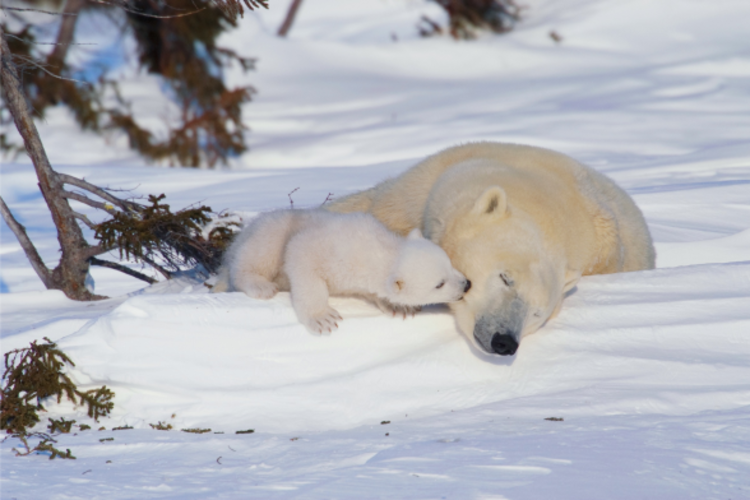
Photo: Daniel J. Cox
Become part of a community committed to protecting polar bears with our free e-news.


The actions we take today give polar bears a chance at an even better tomorrow.