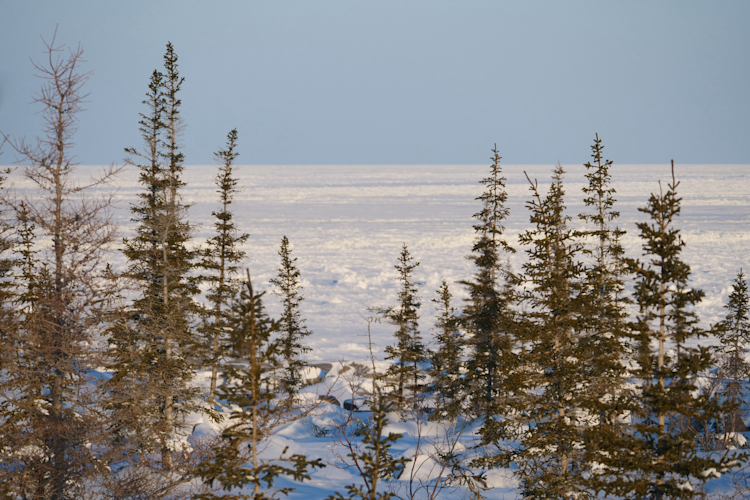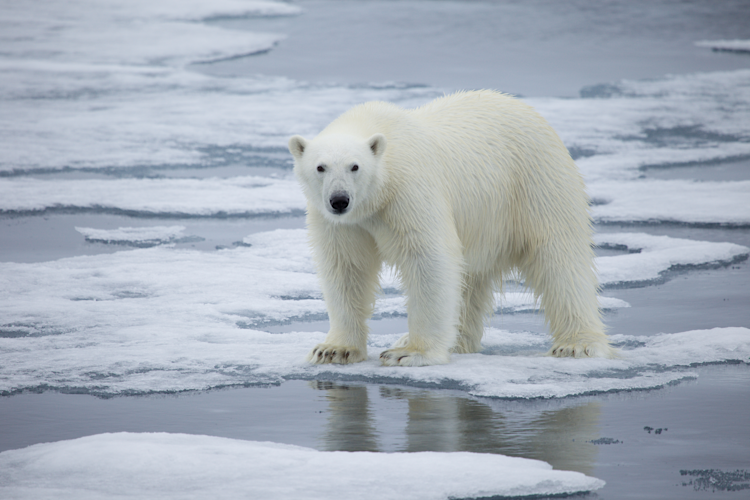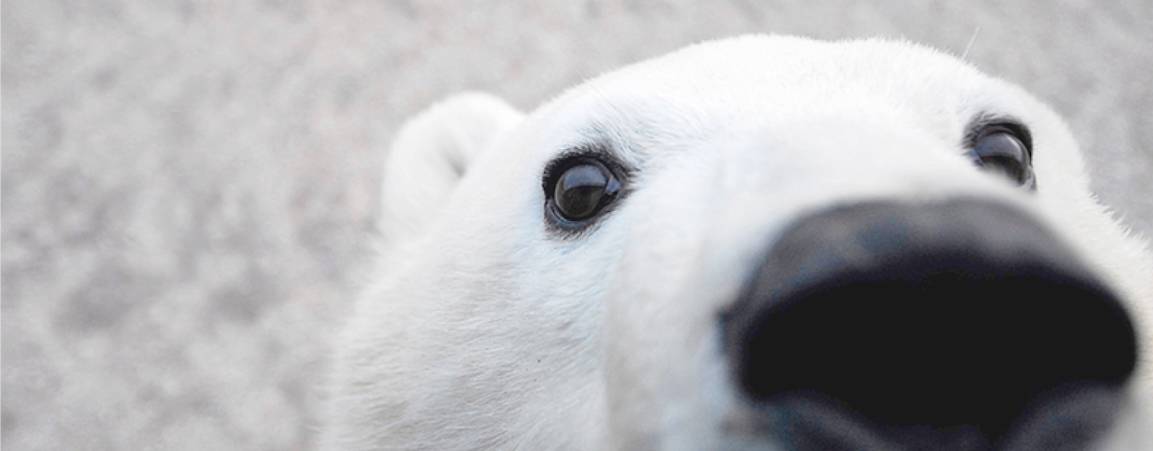


Polar bear mom with twin cubs climbing on her fresh out of the den in Wapusk National Park

Photo: Daniel J. Cox

Share the science to protect moms and cubs

MINS


11 Feb 2026

This International Polar Bear Day, you can help protect moms and cubs by sharing what we know about polar bear denning. From oil and gas development to mining projects, decision-makers and communities around the world are making plans that could impact denning habitat. When you share this science, you are supporting informed decision making and elevating the needs of denning polar bear families. 

Fact 1: A stable and uninterrupted denning process is essential to the survival of polar bear cubs.

The first years of a polar bear’s life are the most vulnerable. Cubs are born during the winter in dens hidden under the snow. At birth, they are blind, lightly furred, and weigh about one pound. During the first months of their lives, they stay sheltered in snow dens with their mother, depending completely on her for food, warmth, and protection. Families remain in the den until spring when the cubs are finally large enough to survive the rigors of outside Arctic conditions. The dens are invisible to someone on the surface, having no discernible markers.

Fact 2: Oil and gas activities pose significant on the ground threats to denning mother polar bears and their cubs.

The effects of noise, vibration, human presence, and other disturbance to polar bears produced by industrial activities—like seismic testing, road building, hauling of heavy equipment, and drilling — could significantly impact denning in both the post-emergence and post-departure period. 

Polar bear mom with twin cubs in a grove of trees fresh out of the den in Wapusk National Park

Fact 3: Existing detection and avoidance measures do not adequately protect polar bears from threats of industrial development.

Dens are difficult to detect with current technology, which has been shown to miss over half of known polar bear dens in a surveyed area. While new detection technologies are promising, they require further testing to finalize their operational utility. 

Fact 4: Denning polar bears are unable to simply move away from a disturbance without substantial risk to newborn cubs

Polar bears are reluctant to abandon their dens. This could make bears in undetected dens vulnerable to harm from heavy equipment or high intensity disturbance because they have such a strong sense of security while sheltered inside, coupled with significant maternal investment. If a family was forced to abandon their den it would do so at great risk to the small young cubs. 

Fact 5: Every maternal den matters.

Cub survival rates can vary greatly by region and annual sea ice conditions, but on average only about 50 percent of cubs live past their first year. In parts of the Arctic with more sea ice loss, cub survival rates are even lower. Protecting vulnerable maternal dens from disturbance is essential for the persistence of the species. 

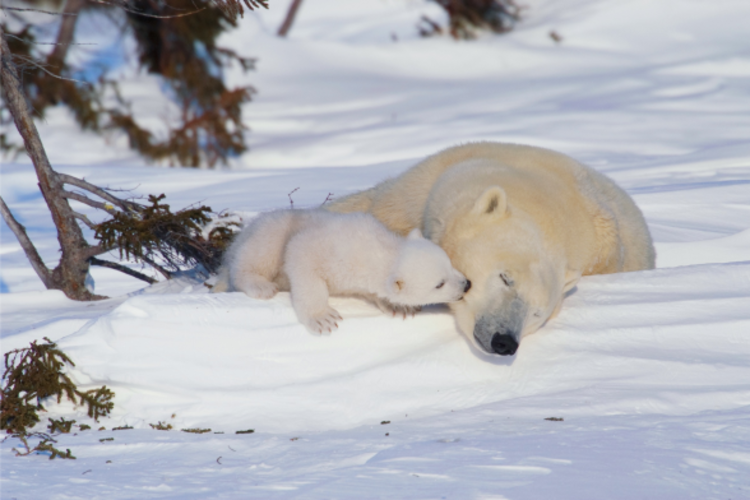
Polar bear mom nursing her cub fresh out of the den in Wapusk National Park

References

Amstrup, S. C. (1993). Human disturbances of denning polar bears in Alaska. ARCTIC, 46(3). https://doi.org/10.14430/arctic1349 

Amstrup S. C., York G., McDonald T. L., Nielson R.. (2004). Simac K. Detecting denning polar bears with forward looking infra-red (FLIR) imagery. BioSci. 54: 337–344. https://doi.org/10.1641/0006-3568

Atwood, T. C., Marcot, B. G., Douglas, D. C., Bromaghin, J. F., & Pagano, A. M. (2025). Assessing the combined influence of biotic and anthropogenic stressors on polar bears to inform conservation planning. Ecosphere, 16(6). https://doi.org/10.1002/ecs2.70316 

Bromaghin, J. F., McDonald, T. L., Stirling, I., Derocher, A. E., Richardson, E. S., Regehr, E. V., Douglas, D. C., Durner, G. M., Atwood, T., & Amstrup, S. C. (2014). Polar bear population dynamics in the southern Beaufort Sea during a period of sea ice decline. Ecological Applications, 25(3), 634–651. https://doi.org/10.1890/14-1129.1

Durner, G. M., & Atwood, T. C. (2018). A comparison of photograph-interpreted and IfSAR-derived maps of polar bear denning habitat for the 1002 Area of the Arctic National Wildlife Refuge, Alaska. Antarctica a Keystone in a Changing World. https://doi.org/10.3133/ofr20181083 

Larson, W.G., Smith, T.S., York, G. (2020). Human Interaction and Disturbance of Denning Polar Bears on Alaska’s North Slope. Arctic, vol. 73, no. 2, 2020, pp. 195–205. JSTOR, https://www.jstor.org/stable/26974892 

Regehr, E. V., Hunter, C. M., Caswell, H., Amstrup, S. C., & Stirling, I. (2009). Survival and breeding of polar bears in the southern Beaufort Sea in relation to sea ice. Journal of Animal Ecology, 79(1), 117–127. https://doi.org/10.1111/j.1365-2656.2009.01603.x 

Smith, T. S., Amstrup, S. C., Kirschhoffer, B. J., & York, G. (2020). Efficacy of aerial forward-looking infrared surveys for detecting polar bear maternal dens. PLoS ONE, 15(2), e0222744. https://doi.org/10.1371/journal.pone.0222744

Stacey, J., Gronnemose, W., Rabus, B., York, G., and Aars, J. (2024). SAR Detection of Bear Dens in Snow. EUSAR 2024; 15th European Conference on Synthetic Aperture

Radar, Munich, Germany, pp. 377-382.